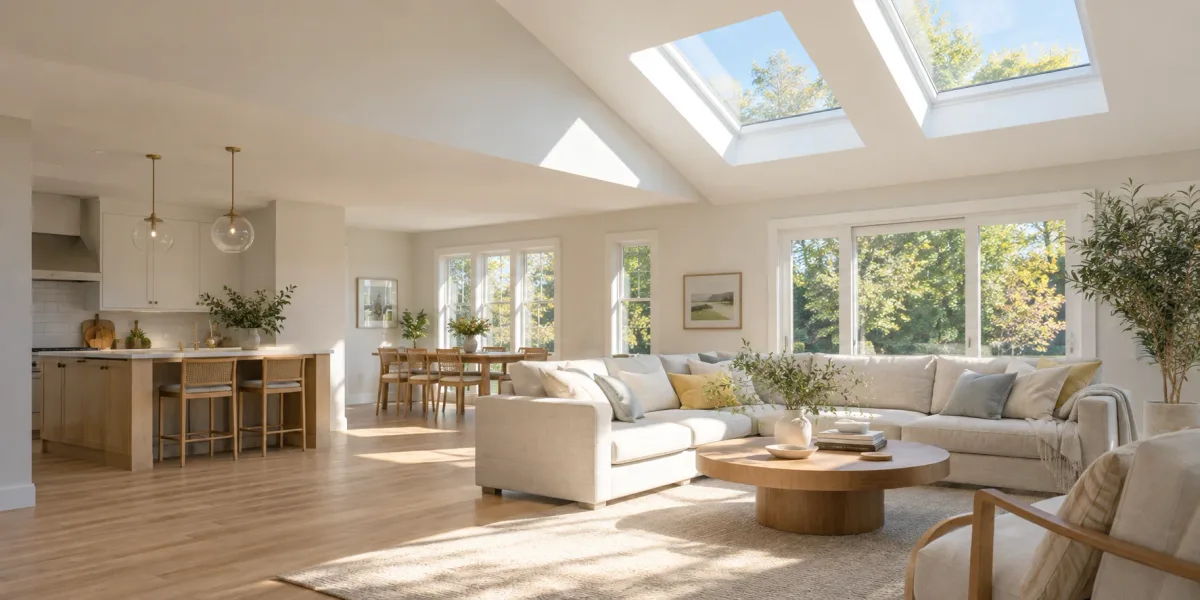
Cherry Hill Skylights helps Gibbsboro homeowners prepare for skylight installation, replacement and leak repair in a setting defined by trees and water. This small wooded borough sits east of Voorhees near Lindenwold, gathered around the Gibbsboro lakes with the Route 561 corridor running through, roughly 10 miles from Cherry Hill. Many houses here were built between the 1960s and 1990s as split levels, colonials and ranches, and most sit under a canopy that shades the roof for much of the day. Start with the darkened room and the condition of the roof above it before choosing any unit.
Read the tree canopy before placing an opening
The feature that makes Gibbsboro pleasant also complicates daylight planning. A mature oak or stand of pines can keep a south-facing roof in shadow while a smaller plane nearby catches more sky. Walk the property and note which limbs actually overhang the roof, where sky is visible between them, and how that gap shifts through the morning and afternoon. A skylight placed under dense canopy delivers softer, more variable light than the same unit on an open roof.
Bring that observation to the assessment rather than assuming the roof sees full sun. Ask the provider to relate the proposed opening to the visible sky above it and to discuss whether a clear-glazed or a diffusing unit suits the exposure. The skylight installation guide covers the broader opening and weatherproofing sequence, and the canopy question belongs in it from the start, not as an afterthought once the frame is cut.
Trace daylight through a split-level or colonial roof
A Gibbsboro split level arranges living space across offset half-floors, so the room that feels dim and the roof plane that could light it may not share a level. A family room dropped below grade and a bedroom wing a few steps up present different routes to the same roof. Mark the ceiling where light is wanted and compare it with the attic or roof directly above, because the vertical distance and any intervening level shape the whole design.
In a 1970s or 1980s colonial, upstairs bedrooms sit under the main roof while a rear addition may carry its own lower slope. The skylight replacement guide helps where an existing opening is already in place on one of those planes. Ask the provider to show, for each candidate location, how the shaft would travel past framing, ducts and wiring. A convenient spot on the ceiling plan means little until that path is confirmed on the actual structure.
Give a debris-laden curb its own inspection
Under heavy canopy, leaves and pine needles drift steadily onto the roof and lodge against anything raised. An older curb-mounted skylight becomes a natural catch point, and litter packed along its uphill side holds water where the roof is supposed to shed it. Describe where debris collects on your roof and whether the curb sits in a valley or behind a chimney that funnels runoff toward it.
Have the provider inspect the curb, its fasteners and the surrounding roof covering rather than reading the painted interior as the whole story. The skylight flashing repair guide frames questions about the overlapping layers that carry water around the opening. Ask whether the existing curb can remain, needs rebuilding or should change height for the selected unit, and keep the interior trim and shaft in that same decision so no edge is left unfinished after the exchange.
Separate fogged glazing from a canopy-season leak
A skylight that has weathered several Gibbsboro seasons can cloud between its sealed panes, and no roof work clears that haze. Note whether the fog stays in dry weather and whether either reachable glass surface wipes clean. Trapped moisture in insulated glazing points to a seal issue that a glass or unit assessment should price on its own terms.
Water stains deserve a separate record. Autumn storms arriving with a roof already carrying wet leaves can expose a weak flashing detail that stays quiet in summer. Write down which corner darkens first, the weather at the time and whether the mark spreads after prolonged rain. The leaking skylight repair guide frames that investigation, and the broader skylight repair guide covers glazing, controls and finishes together. Ask how the proposed fix matches the located entry point and what remains concealed behind the ceiling.
Decide the skylight question before the reroof
Because canopy debris shortens the comfortable life of a roof here, many Gibbsboro reroofs arrive while an older skylight is still in place. That open-roof moment is the natural time to settle the unit’s future rather than shingle around it. Gather any product label or installation record you can reach from inside, but avoid assigning an age from how the frame looks.
Have the roofer and skylight provider agree who evaluates the curb, orders compatible flashing and completes the connection to the new covering. The skylight installation cost guide helps organize that comparison across retaining and replacing the unit without reducing it to the glass alone. Put removal, temporary weather protection, flashing and final roof closure in one schedule, and require a written, photographed approval before any softened decking or curb wood discovered during the work is concealed again.
Bring light to a shaded hall or bath with a sun tunnel
An interior Gibbsboro hallway or a bath set toward the middle of a split level may never reach an exterior wall, and under canopy even a conventional skylight can struggle. A sun tunnel installation is worth assessing where the attic offers a workable route between a roof collector and a ceiling diffuser. The collector still needs a roof position with usable sky between branches, so the canopy survey matters here as much as for a glazed opening.
Have the provider map the tube path, including bends and any attic equipment, and explain how length and roof shade affect the daylight that actually arrives. For a larger glazed opening in a brighter room, discuss skylight shades and a control reachable from a normal standing position, so changeable light under moving canopy can be adjusted through the day.
Keep Gibbsboro approvals and access with the job
Confirm the current permit and inspection requirements for the Gibbsboro address before opening a new ceiling, changing framing or adding powered equipment. Describe the actual work rather than leaning on the word replacement, and let the borough’s response set the local process; a neighboring town’s experience cannot settle this parcel. The New Jersey Division of Codes and Standards offers statewide code background, and ENERGY STAR guidance on skylights can inform glazing choices, while the address-specific process is confirmed locally.
The Route 561 corridor and the lakes help locate the property, but the wooded driveway and yard decide practical access. Include ordinary parking notes, low branches over the approach, and the route to the affected room in your request. Arrange room protection, attic access and a place for removed materials, and name who may approve concealed repairs if weather interrupts the sequence.
Send your Gibbsboro project details with indoor photographs, roof age, the existing unit’s label if reachable, the canopy and debris picture, and the timing of any reroof. Use safe indoor or ground-level views rather than climbing to gather measurements. Nearby guides for Voorhees Township, Somerdale and Stratford offer further planning context, and the Lindenwold guide just west looks at compact capes, condo roofs and interior halls that need daylight, while each home’s measurements and municipal requirements stay specific to its own address.
Urgent roof-line problems in Gibbsboro are handled through emergency skylight repair in Cherry Hill, NJ, while local storefronts, offices, and other businesses can plan commercial skylight repair across South Jersey.
Before the assessment
01Does heavy tree canopy over a Gibbsboro lot make a skylight pointless?
Not necessarily, but canopy changes the plan. Record which branches overhang the roof and whether shade moves across the day. A provider can weigh glazing choice and opening position against that shade, rather than assuming the roof sees open sky the way a catalog photograph implies.
02Why do pine needles and leaves matter at my skylight curb?
Debris packed against a raised curb holds moisture and blocks the path water should take around the opening. Note where litter collects and whether the uphill side drains freely. That observation helps an assessor judge flashing condition without treating a clogged curb as proof of a failed unit.
03How does a split-level roof affect where daylight can reach?
A split level stacks rooms at offset heights, so the ceiling that needs light and the nearest workable roof plane may sit on different levels. Ask the provider to trace the route between them, because a short shaft on one level can become a long or angled run on another.
04Should a fogged Gibbsboro skylight be addressed during a planned reroof?
A reroof is a sensible moment to decide, since the surrounding roofing is already open. Have the unit, curb and compatible flashing evaluated together and record whether the glazing haze sits between sealed panes, which new shingles alone will not clear.
05Can an interior Gibbsboro bath get daylight when the lot is shaded?
Possibly, through a sun tunnel, but the roof collector still needs a position with usable sky between branches. Have the provider map the tube route past attic framing and explain how nearby shade affects delivered light before comparing the tunnel with a conventional opening.